Non-Destructive Testing (NDT)
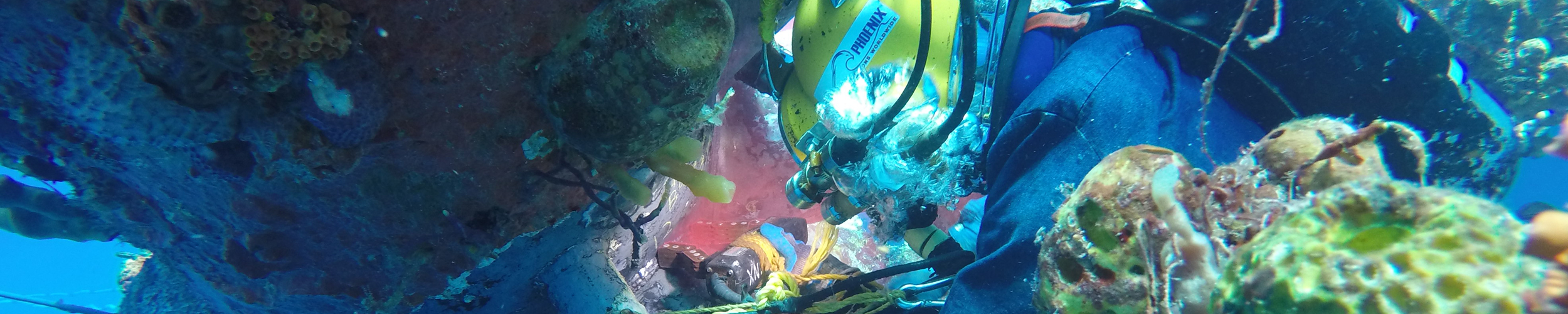
Non-Destructive Testing (NDT) is a core capability at Phoenix International and a critical element in ensuring the quality, safety, and integrity of underwater assets.
Our team includes experienced Level II inspectors and an in-house Level III Examiner, providing a full range of inspection services tailored to meet both commercial and government requirements. From routine evaluations to complex underwater assessments, Phoenix delivers proven, reliable NDT solutions across the globe.
Visual Testing (VT)
Wet-underwater, Dry Surface, and Dry Chamber
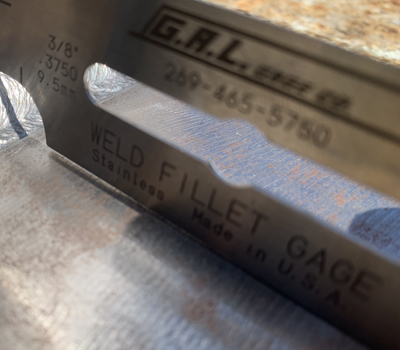
Visual Testing (VT) is the most widely used and fundamental Non-Destructive Testing (NDT) method. As the first critical step in any inspection process, VT can be used independently or in combination with other NDT techniques to identify a wide range of surface-level issues.
When properly applied, VT is effective in detecting:
- Physical Damage
- Corrosion
- Erosion
- Surface flaws and discontinuities
Certified Inspection Professionals
At Phoenix International, our VT inspectors are certified to meet or exceed the rigorous standards set by:
- International Association of Welding (IAW)
- Naval Sea Systems Command (NAVSEA)
- American Society for Nondestructive Testing (ASNT)
With deep expertise and industry-recognized credentials, Phoenix ensures the accuracy, reliability, and integrity of every visual inspection—onshore, offshore, or underwater.
Dye Penetrant Testing (PT)
Dry Chamber & Surface
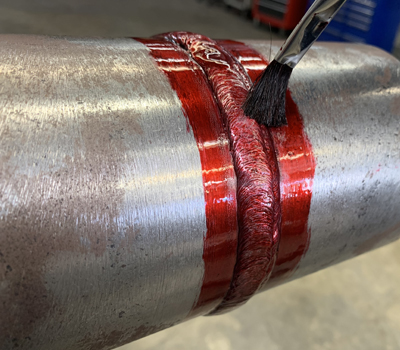 Dye Penetrant Testing (PT) is a cost-effective, widely used Non-Destructive Testing (NDT) method designed to detect surface-breaking flaws in nonporous materials. This method is especially effective for inspecting non-ferrous metals such as stainless steel, aluminum, and other nonmagnetic alloys—but it is equally applicable to ferrous materials when appropriate.
Phoenix’s PT Inspection techniques are ideal for identifying:
- Cracks
- Surface Corrosion
- Porosity
- Laps and Seams
Whether performed in a dry chamber or on surface components, our skilled technicians ensure accurate, high-quality results using procedures tailored to meet project-specific requirements.
Our PT inspections are conducted by qualified personnel following industry standards and best practices, ensuring the reliable detection of flaws that could compromise safety or performance.
Magnetic Particle Testing (MT)
Wet, Dry Chamber, & Surface
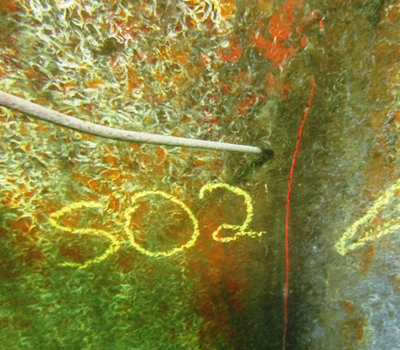
Magnetic Particle Testing (MT) is a highly effective Nondestructive Examination (NDE) method used to check surface and near surface breaking flaws in ferromagnetic materials. This inspection technique is excellent for finding surface breaking flaws and near surface flaws.
Phoenix performs both wet and dry magnetic particle testing and inspection services to test for:
- Corrosion-related flaws
- Fatigue cracks
- Laps
- Porosity
- Stress corrosion cracking
- Tears
- Welding defects
Ultrasonic Testing (UT)
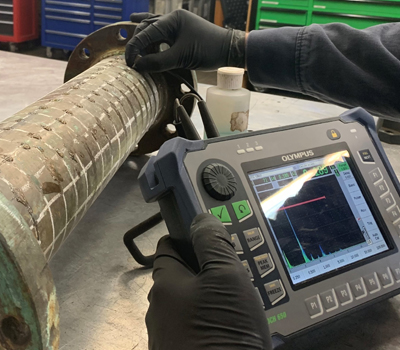
Ultrasonic Testing (UT) is a versatile Non-Destructive Testing (NDT) method that uses high-frequency sound waves to detect internal flaws, surface discontinuities, and to measure material thickness in acoustically conductive materials such as steel, aluminum, composites, and glass.
At Phoenix International, our certified technicians leverage advanced ultrasonic flaw detectors and their expertise to accurately interpret results, enabling precise acceptance or rejection decisions based on the presence, size, and location of indications.
Common Applications:
- Corrosion and erosion surveys
- Weld inspection and defect detection
- Thickness measurement
- Indication sizing and flaw mapping